

 0812 46 37 27



Choosing a supplier shouldn’t just be based on the quality of vegetables or price, but also on their invoicing, documentation, and accounts receivable reconciliation processes. A supplier with transparent procedures will help restaurants reduce the risk of errors, save processing time, and facilitate financial management. Below is a set of questions to evaluate vegetable suppliers regarding invoicing, documentation, and accounts receivable reconciliation that you should refer to before partnering with them.
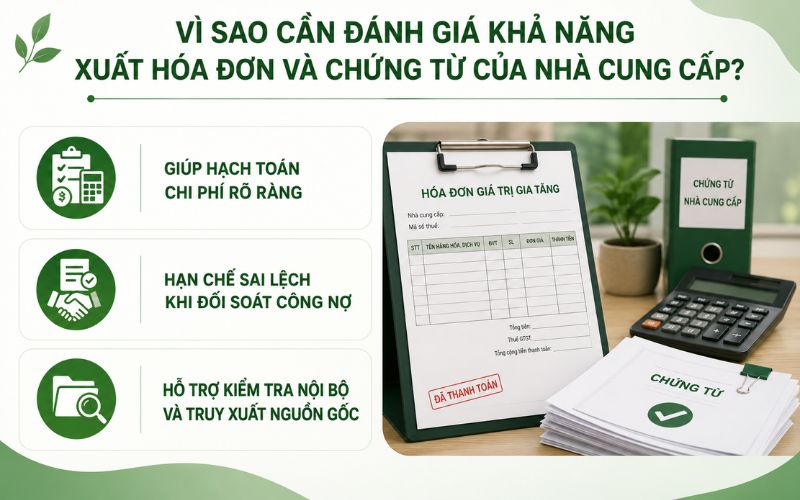
Why is it necessary to assess a supplier’s ability to issue invoices and supporting documents?
For restaurants, eateries, or communal kitchens, invoices and supporting documents not only serve for payment but also form the basis for cost accounting, debt control, and compliance with accounting, tax, and food safety requirements. Assessing a supplier’s ability to provide complete documentation from the outset will help businesses mitigate many risks during operation.
- Helps to account for costs clearly: Suppliers who can issue valid electronic invoices on time and with accurate information will help businesses record expenses accurately, facilitating tax declarations, financial reporting, and accounting record keeping in accordance with regulations.
- Minimize discrepancies when reconciling accounts payable: Complete invoices, delivery notes, delivery receipts, and accounts receivable reconciliation statements make it easy for both parties to verify quantities, unit prices, payment values, and adjustments. This reduces the risk of disputes or discrepancies in accounts payable.
- Support for internal auditing and traceability: Complete purchasing records, including invoices, delivery notes, and other product-related documents, facilitate internal audits, assist regulatory inspections, and enable traceability of raw materials when necessary. This is also a crucial part of meeting food safety management and quality control system requirements.
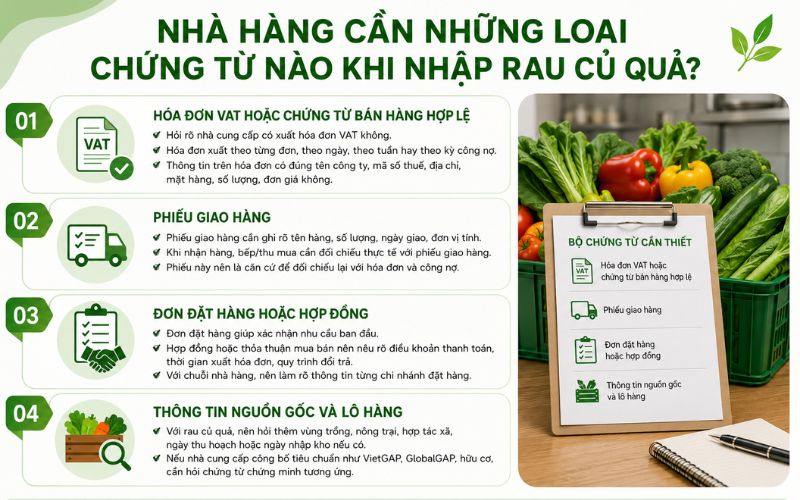
What types of documents does a restaurant need when importing fruits and vegetables?
To control costs, reconcile accounts payable, and meet accounting and food safety requirements, restaurants should request that suppliers provide complete documentation for each delivery. Below are some important types of documents to check.
A valid VAT invoice or sales document.
Invoices are the basis for businesses to record expenses, declare taxes, and maintain accounting records. Before collaborating with a supplier, the restaurant should clarify their ability to issue invoices.
- Ask the supplier if they can issue a VAT invoice or if they can only provide a sales receipt.
- Confirm the invoice issuance time: per order, by day, by week, or per accounts receivable reconciliation period.
- Verify that the information on the invoice is complete and accurate, including the company name, tax identification number, address, item name, quantity, unit price, and total payment amount.
- Standardize the procedures for handling necessary adjustments or reissuing invoices when errors occur.
Delivery note
A delivery note is a document that helps confirm the quantity and type of goods that have been actually delivered.
- The delivery slip should clearly state the name of the goods, quantity, unit of measurement, delivery date, and the information of the sender and recipient.
- Upon receiving the goods, the kitchen or purchasing department needs to compare the actual items with the delivery slip to detect any shortages or incorrect types of goods.
- Keep the delivery slip for comparison with the invoice and accounts receivable statement during payment periods.
- If any returns or shortages occur, this must be noted immediately on the receipt or documented in a written report.
Order or contract
Purchase orders and contracts form the basis for defining the rights and obligations of both parties in the buying and selling process.
- A purchase order helps confirm the initial requirements regarding the item, quantity, time, and location of delivery.
- The contract or sales agreement should clearly specify payment terms, invoicing schedule, delivery procedures, and return policy.
- Clarify the responsibilities of each party in the event of underdelivery, incorrect delivery, or delayed delivery.
- For restaurant chains, specific information regarding each branch placing the order, the delivery location, and the person responsible for confirming the order should be clearly defined.
Origin and shipment information
For fresh fruits and vegetables, restaurants should inquire about the growing region, farm, cooperative, or production unit to assess the origin of the ingredients. They should also request additional information from suppliers such as the harvest date, warehousing date, or batch number (if available). This data facilitates quick traceability in case of quality issues or when authorities request inspections.
If a supplier claims their products meet standards such as VietGAP, GlobalGAP, or organic, don’t rely solely on promotional information. Restaurants should request valid certificates or documentation issued by competent authorities. Checking these documents helps verify the supplier’s transparency and increases confidence in the source of the ingredients used.
Suggested questions to ask when evaluating vegetable suppliers for transparent documentation before partnering with them.
Before signing a partnership agreement, the restaurant should discuss in-person procedures, delivery, and accounts receivable reconciliation with the supplier. The following questions will help assess the supplier’s professionalism, transparency, and ability to cooperate throughout the working process.
| Category | The question should be asked. |
| Bill |
|
| Delivery note |
|
| Reconciliation of accounts payable |
|
| Data storage |
|
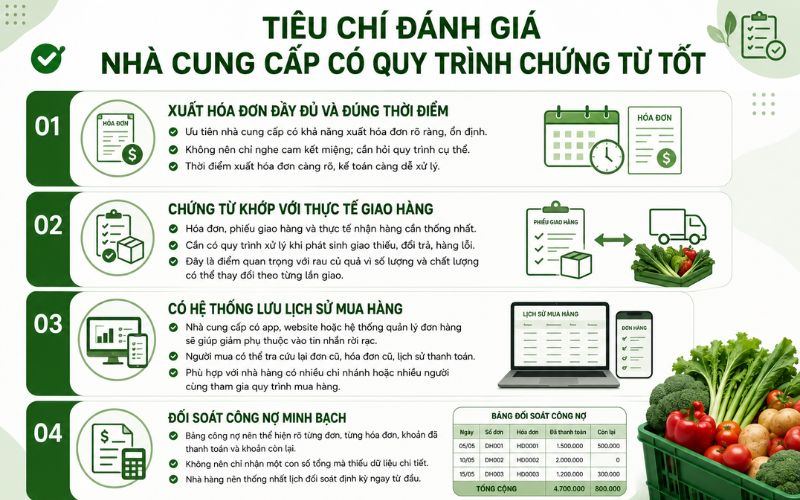
Criteria for evaluating suppliers with good documentation procedures.
A professional supplier not only ensures the quality of vegetables but also needs a clear and consistent documentation process. This helps restaurants reduce paperwork time, minimize disputes, and facilitate accounting and internal control.
Issue invoices fully and on time.
Restaurants should prioritize suppliers with transparent and consistent invoicing processes, rather than relying solely on verbal promises. From the outset, clearly discuss the timing of invoicing, the format, and the procedures for handling any necessary adjustments.
A clear invoicing process will help the accounting department easily record expenses, file taxes, and reconcile accounts payable. At the same time, standardizing the timing of invoice issuance for each order or payment period helps minimize errors during the process.
The documents match the actual delivery.
All documents related to the order must accurately reflect the actual delivery. The information on the invoice, delivery note, and actual goods should be consistent in terms of product name, quantity, unit of measurement, and payment value.
For fresh fruits and vegetables, the quantity or quality can vary due to the nature of the product. Therefore, suppliers need to have clear procedures for handling cases of short deliveries, returns, or substandard goods, and to fully update relevant documents for easy verification later.
There is a system for storing purchase history.
A supplier using a website, app, or order management system will make the purchasing process more transparent and convenient. Instead of having to search through emails or messages, restaurants can quickly look up placed orders, invoices, delivery slips, and payment history.
This criterion is particularly suitable for restaurants with multiple branches or multiple staff members involved in placing orders. Centralized data storage helps reduce the loss of documents and facilitates verification and comparison when needed.
Transparent debt reconciliation
Suppliers should provide detailed accounts payable statements, showing each order, invoice number, payment value, amount paid, and remaining balance. This allows the accounting department to easily check and detect discrepancies if any exist.
Instead of just receiving a single total debt figure, the restaurant should request a reconciliation statement with complete data for easy verification. At the same time, both parties should agree on a regular reconciliation schedule, weekly or monthly, from the beginning of the partnership to ensure transparent and accurate payment processing.
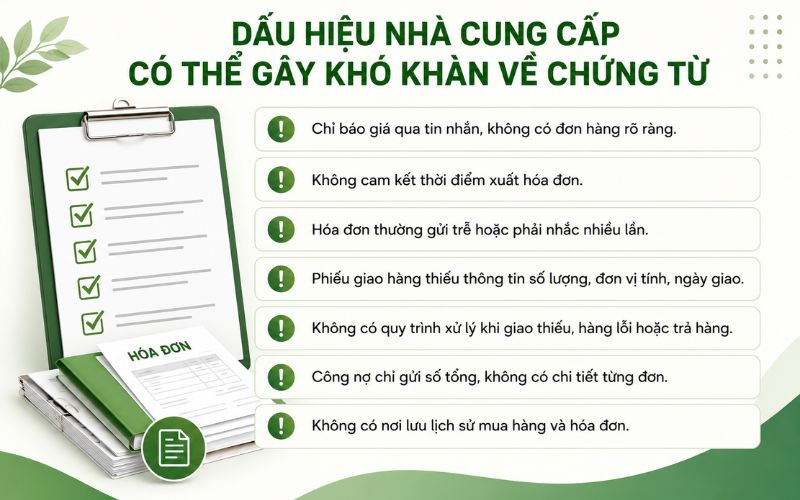
Signs that the supplier may be causing difficulties with documentation.
A supplier with a lack of transparency in their documentation process will cause restaurants to waste time on paperwork, easily lead to errors when reconciling accounts payable, and create difficulties in accounting. Below are some common signs you should check before deciding to partner with them.
- The price was quoted only via text message, with no clear order: All transaction information is exchanged only via Zalo, Messenger, or phone calls without any order form or written confirmation, making verification difficult in case of disputes.
- No commitment to the invoice issuance date: The supplier did not clearly notify when invoices would be issued, or changed the issuance time depending on the order, affecting the business’s accounting and tax declaration plans.
- Bills are often sent late or require multiple reminders: Delays in providing invoices prolong the time it takes to complete accounting records and may affect the progress of debt settlement and reconciliation.
- The delivery slip is missing important information: The delivery slips often lack complete information on item names, quantities, units of measurement, or delivery dates, making it difficult for the purchasing and accounting departments to verify the accuracy of the orders.
- There is no procedure for handling missing items, defective goods, or returns: When problems arise, the supplier often lacks clear instructions or documentation on how to handle them, easily leading to disputes over the quantity of goods delivered and the value of payment.
- The accounts receivable report only sends the total amount, without details for each order: The reconciliation statement does not show each individual order, invoice, or payment, making it difficult to check discrepancies and confirm outstanding debts.
- There is no place to save purchase history and invoices: The supplier lacks a system for storing electronic orders or documents, making it time-consuming to retrieve invoices, delivery notes, and transaction history.
If a supplier exhibits multiple of these signs simultaneously, the restaurant should reassess its documentation management process before signing a contract. Choosing a supplier with a transparent invoicing, documentation, and reconciliation system will help reduce operational risks while improving financial management and internal control.
How does Kamereo help restaurants solve the problems of invoicing, documentation, and reconciliation?
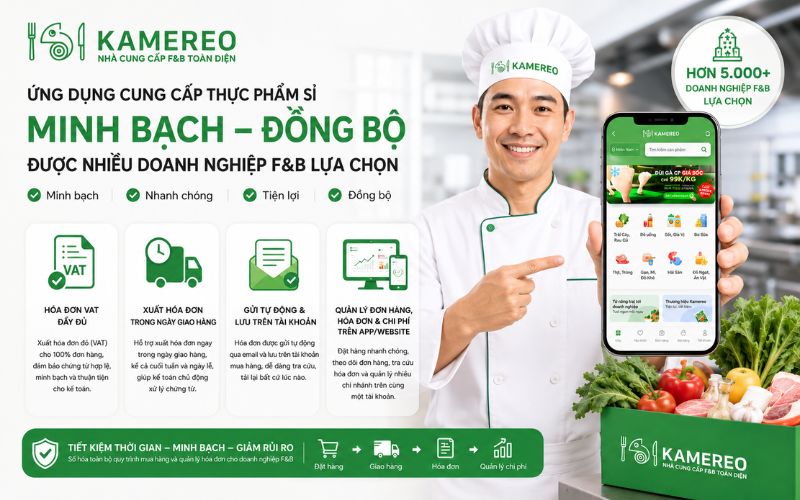
After evaluating criteria such as invoices, documents, and accounts receivable reconciliation, restaurants should prioritize suppliers with transparent and digitized operational processes. This helps reduce paperwork processing time, minimize accounting errors, and improve cost management efficiency. Kamereo is a transparent wholesale food supplier application chosen by many F&B businesses thanks to its synchronized invoice and order management system.
Full VAT invoice provided for all orders.
For F&B businesses, receiving a complete VAT invoice is crucial for accounting expenses and tax declaration. Kamereo supports issuing VAT invoices for 100% of orders, ensuring all transactions have complete and valid documentation, bringing transparency and convenience to financial management.
Invoices will be issued on the day of delivery.
One common problem when working with multiple suppliers is having to wait days or constantly remind them to receive an invoice. Kamereo supports issuing invoices on the same day of delivery, including weekends and holidays, helping the accounting department proactively process documents without disrupting the accounting and accounts receivable reconciliation process.
Automatically sent and saved to the purchase account.
In the order account with Kamereo, electronic invoices will be notified and automatically sent via email after issuance, and also stored directly in the customer’s purchase account. This allows businesses to easily search for and download invoices at any time without worrying about lost documents or wasting time contacting suppliers. This also makes reconciliation and accounting record keeping more convenient.
Manage orders, invoices, and expenses on the app/website.
In addition to supporting invoice issuance,CamerounIt also provides a purchasing management platform website and application, helps businesses track the entire import process on a unified system.
- Order online quickly via app or website.
- Track your order history and real-time delivery status.
- Look up electronic invoices right in your purchase account.
- Manage multiple branches in the same account, suitable for restaurant and cafe chains.
- Reduce reliance on fragmented text messages, emails, or paper documents, helps to store data centrally and makes it easy to check when needed.
Thanks to the digitization of the entire process from ordering and document storage to invoice management, Kamereohelps F&B businesses save time on paperwork, enhance transparency, and reduce operational risks.
Frequently Asked Questions
Are vegetable suppliers required to issue VAT invoices?
Issuing VAT invoices depends on the type of business and the regulations applicable to each seller. However, for restaurants and F&B businesses that need transparent expense accounting, it is preferable to cooperate with suppliers who can issue complete invoices and documentation.
When importing vegetables, is a delivery slip alone sufficient?
Not yet. The delivery slip is only for verifying the actual goods. The restaurant still needs a valid invoice or sales document for accounting purposes, tax declaration, and accounts receivable reconciliation.
How often should I reconcile accounts payable with suppliers?
If ordering goods regularly, the restaurant should reconcile accounts payable weekly or monthly. For daily orders, delivery slips should be kept and updated on the same day to minimize errors.
How can I avoid receiving an invoice that doesn’t match the goods I’ve received?
Restaurants should compare the order, delivery note, and invoice before making payment. If there are any shortages, returns, or price adjustments, they should request updated documentation from the supplier before finalizing the payment.
Does Kamereo issue VAT invoices for F&B orders?
Yes. Kamereo supports issuing VAT invoices for 100% of orders, sending them automatically via email and storing them in the purchasing account, making it easy for businesses to look up, account for, and reconcile transactions.
Summary
Evaluating a vegetable supplier shouldn’t just focus on product quality or price; it should also consider their ability to issue invoices, provide documentation, and manage accounts receivable effectively. A supplier with a transparent management system will save the restaurant time, reduce accounting risks, and control costs more efficiently.
If you’re looking for a wholesale food supply solution with full VAT invoices, transparent documentation, and a modern order management platform, Kamereo is a worthwhile option. Contact Kamereo today to optimize your procurement process and cost management for your F&B business.
See more: