

 0812 46 37 27



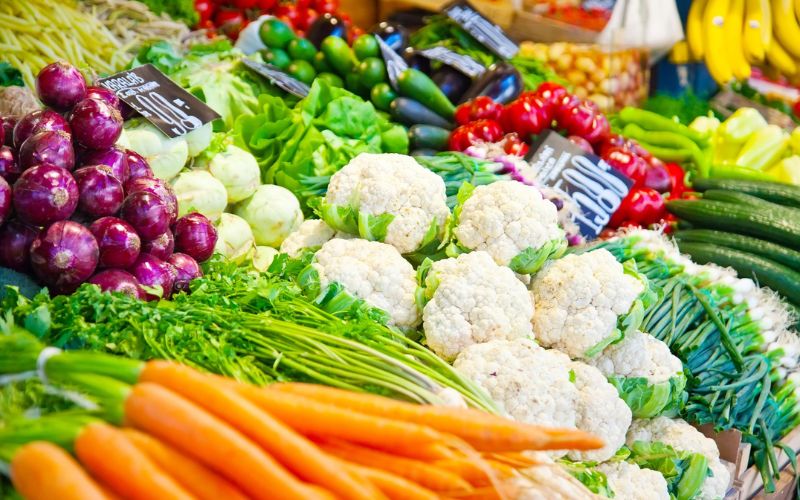
For restaurants, eateries, cafes, or corporate kitchens, vegetables are a frequently purchased but volatile ingredient in terms of price, quality, and supply. Many business owners wonder whether to order vegetables on a daily basis for flexibility or sign a recurring contract for greater stability. This article will compare these two methods based on key factors such as price, risk of shortages, ordering conditions, quality, and operational control.
Why is importing fruits and vegetables a crucial issue for F&B businesses?
For restaurants, eateries, cafes, or corporate kitchens, vegetables are a group of ingredients used daily and directly affect the quality of the dishes. If the supply of vegetables is inconsistent in terms of freshness, size, or quality, the flavor, quantity, and presentation of the dishes can be altered. This directly impacts the customer experience as well as the business’s ability to control food costs.
Furthermore, vegetable prices fluctuate significantly depending on the season, weather, and market supply. Without proper procurement planning, businesses can easily face sudden increases in raw material costs or shortages during peak hours, disrupting kitchen operations and impacting revenue. This is also why many F&B businesses today prioritize working with suppliers capable of stable supply and good quality control, such as Kamereo.
Besides price, restaurants must balance many other criteria such as order flexibility, fast delivery, traceability, and transparency in billing. In continuous service models, even a shortage of ingredients for just a few hours can reduce operational efficiency and impact the customer experience.
Therefore, for F&B businesses, importing vegetables is not simply about purchasing daily ingredients, but also about managing operational risks, controlling costs, and ensuring the stability of the entire business operation.
Advantages and disadvantages of importing vegetables in small quantities on a daily basis.
Buying vegetables on a daily basis is a popular choice for many small eateries, restaurants, or cafes during their initial operating stages. With this method, the owner or purchasing staff places orders based on actual daily needs from wholesale markets, traditional markets, small traders, or smaller suppliers.
This model has the advantage of flexibility in terms of quantity and types of goods imported, making it particularly suitable for businesses with frequently changing menus or unstable customer bases. However, dependence on daily supply sources also creates significant challenges for F&B businesses in controlling prices, quality, and long-term operations.
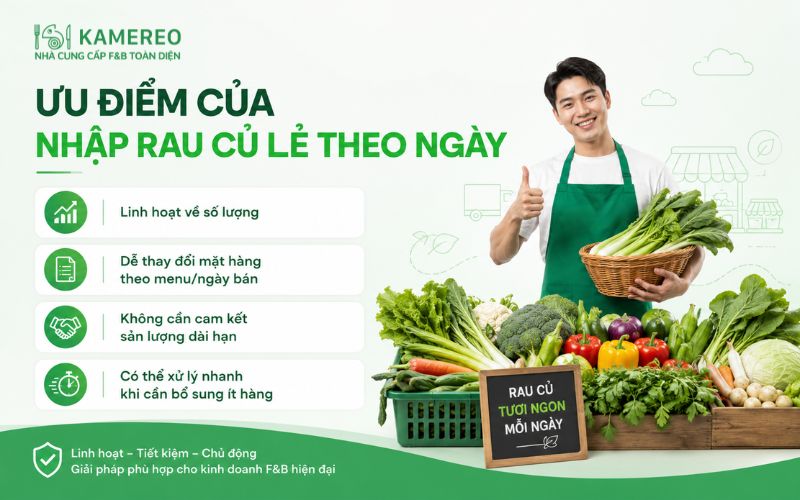
Advantages of importing vegetables in small quantities on a daily basis.
Daily vegetable and fruit deliveries allow businesses to easily adapt to actual demand and avoid production quotas. This is a suitable option for small restaurants or F&B models that require high operational flexibility.
- Flexible in terms of quantity: Businesses can proactively increase or decrease the amount of vegetables imported each day depending on actual customer demand, thereby limiting inventory and reducing material waste.
- It’s easy to change items according to the menu/sales day: If the menu changes frequently or needs seasonal additions, the restaurant can flexibly choose suitable vegetables without being limited by a fixed list.
- No long-term production commitment required: Newly opened shops or those with unstable sales can source goods freely without needing to sign contracts or commit to sales targets with suppliers.
- It can be processed quickly when only a small amount of stock needs to be added: In case of unexpected customer increases or ingredient shortages, buying in smaller quantities allows the restaurant to quickly replenish small amounts throughout the day.
Limitations of importing vegetables on a daily basis.
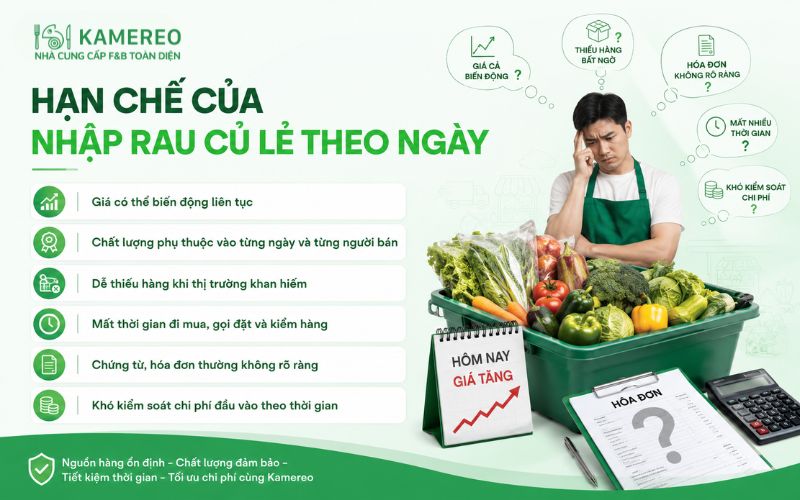
Besides the flexibility, importing vegetables on a daily basis also carries many risks related to price, quality, and cost control. As operations scale up, these issues can directly impact kitchen performance and customer experience.
- Prices can fluctuate constantly: Vegetable prices often fluctuate depending on the season, weather, and market supply, making it difficult for businesses to maintain stable raw material costs over the long term.
- Quality varies from day to day and from seller to seller: Even with the same type of vegetables, freshness, size, or quality can vary between deliveries, affecting dish portions and serving quality.
- Goods are easily scarce when the market is experiencing shortages: During peak season or when supplies fluctuate, many items may run out quickly or be difficult to obtain in sufficient quantities to keep the kitchen running.
- It takes time to go shopping, place orders, and check the goods: Personnel have to constantly contact multiple different parties, manually check quality, and handle issues daily, which wastes operational time.
- Documents and invoices are often unclear: If businesses import goods from wholesale markets or small-scale suppliers, they may face difficulties in obtaining VAT invoices, reconciling costs, and declaring taxes.
- It is difficult to control input costs over time: Purchasing from multiple sources makes it difficult for businesses to track price history, track costs, and optimize procurement budgets in the long term.
Advantages and disadvantages of recurring vegetable import contracts.
A recurring vegetable and fruit supply contract is a form of long-term employment for F&B businesses with a single supplier. Restaurants agree in advance on the list of goods, delivery frequency, pricing, or ordering policies to ensure a stable supply for daily operations.
This model is typically suitable for restaurants, chain stores, or kitchens that need consistent supplies and want to optimize their procurement process.
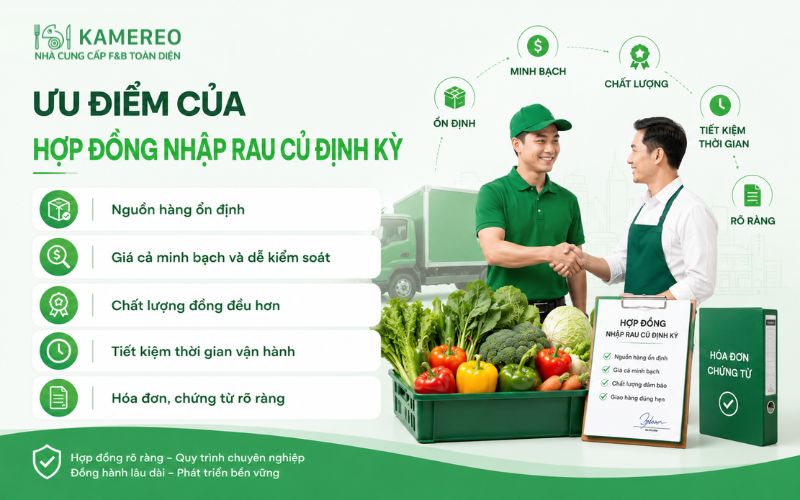
Advantages of a recurring vegetable import contract
Contract purchasing allows F&B businesses to be more proactive in terms of supply, costs, and kitchen operations.
- Stable supply of goods: Businesses can reduce the risk of supply shortages or having to constantly change suppliers when the market fluctuates.
- Prices are transparent and easy to monitor: Many suppliers offer recurring quotes, helping businesses track and manage their budgets more effectively.
- More consistent quality: Vegetables are controlled according to consistent standards, minimizing quality discrepancies between shipments.
- Saves operating time: There’s no need to constantly search for suppliers, make calls to place orders, or check with multiple sources every day.
- Clear invoices and supporting documents: Businesses can easily reconcile expenses and file taxes thanks to a complete and transparent invoicing system.
Limitations of recurring vegetable import contracts
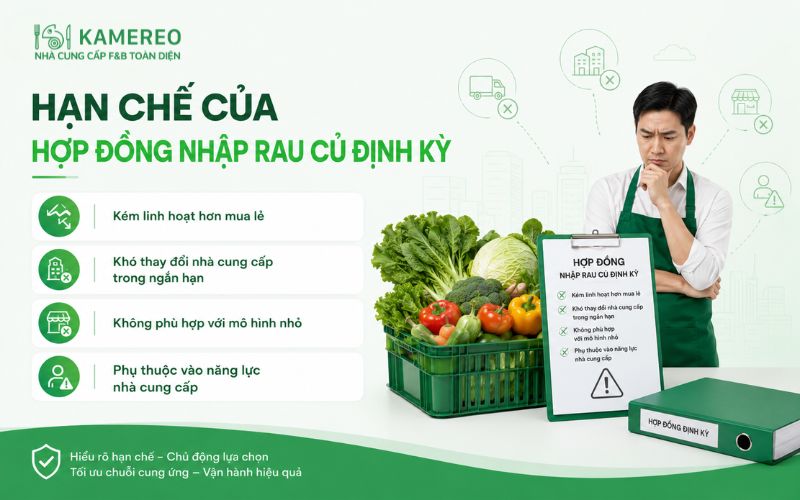
Despite its many advantages, this model still has some limitations if the business does not yet have a stable need.
- Less flexible than buying in bulk: Some suppliers require minimum order quantities or fixed order schedules.
- It’s difficult to change suppliers in the short term: If a long-term contract has been signed, the business will need time to adjust when it wants to change its supplier.
- Not suitable for small models: Newly opened establishments or those with unstable customer bases may struggle to maintain consistent inventory levels.
- Depends on the supplier’s capabilities: If the supplier delivers late or unreliably, the kitchen’s operations will be directly affected.
So compare daily individual vegetable and fruit deliveries with recurring contracts.
Each method of sourcing vegetables and fruits has its own advantages and disadvantages depending on the scale of operation, budget, and stability of the F&B business. For small restaurants or newly opened businesses, daily sourcing can offer more flexibility in the initial stages. Meanwhile, established restaurants or chains often prefer recurring contracts to better control quality, costs, and supply.
Below is a detailed comparison table between these two popular import methods:
| Criteria | Import vegetables in small quantities on a daily basis. | Regular vegetable import contract |
|---|---|---|
| Price | Prices may be lower at certain times if there is an oversupply or it is in season. However, prices often fluctuate greatly depending on the weather, supply, and market demand, making it difficult to control food costs in the long term. | Prices are usually more stable thanks to prior agreements or clear pricing rules. This makes it easier for restaurants to budget and control dish costs over time. |
| Quantity | The number of customers can be adjusted flexibly according to actual daily demand, suitable for restaurants with inconsistent customer traffic. | There are usually fixed daily/weekly/monthly order schedules. Some suppliers may require minimum order quantities. |
| Suppliers | Because they depend on wholesale markets, small traders, or numerous other smaller distributors, their stability is not high. | There is a more stable supply if you work with a supplier that has a professional operational and warehousing system. |
| Risk of stock shortages | They are vulnerable to market fluctuations, especially during the rainy season or periods of supply shortages. They may experience stockouts, sudden price increases, or difficulty finding replacements in a timely manner. | There are fewer risks thanks to advance delivery planning and supply preparation. However, it is still necessary to choose suppliers with good operational capabilities to avoid delays or shortages. |
| Quality | Quality varies from seller to seller and from day to day, making it easy for there to be inconsistencies in size, freshness, or specifications. | Quality is generally more consistent thanks to clear input control standards and delivery processes. |
| Invoice/Receipt | Many small-scale suppliers or wholesale markets do not fully support VAT invoices, making it difficult to reconcile and declare taxes. | These typically include contracts, VAT invoices, and more transparent reconciliation processes, making them suitable for businesses requiring professional financial management. |
| Suitable for | Small shops, newly opened businesses, frequently changing menus, or unstable supply needs. | Restaurants, F&B chains, hotels, or corporate kitchens require consistent ingredient supplies and need to optimize long-term operations. |
Kamereo – A flexible, low-MOQ wholesale vegetable and fruit sourcing solution for restaurants, eateries, and F&B businesses.
For restaurants, eateries, and F&B businesses, the challenge of sourcing vegetables daily isn’t just about price, but also about supply stability, quality, and cost control. While daily sourcing offers flexibility based on actual needs, it can lead to price fluctuations, sudden shortages, or inconsistent quality. Conversely, recurring contracts provide greater stability but can sometimes create pressure on production volume, especially for small and medium-sized businesses.
Kamereo offers a balanced solution between these two options: wholesale vegetable sourcing with low MOQ, flexibility to meet operational needs, while ensuring stable prices and a reliable supply. Businesses can order through the Kamereo app or website, easily select vegetables by category, track prices transparently, and place orders tailored to daily needs without having to stock excessive amounts of inventory.
See more:MOQ and shipping policy at Kamereo
A stable supply of quality vegetables from cooperative farms.
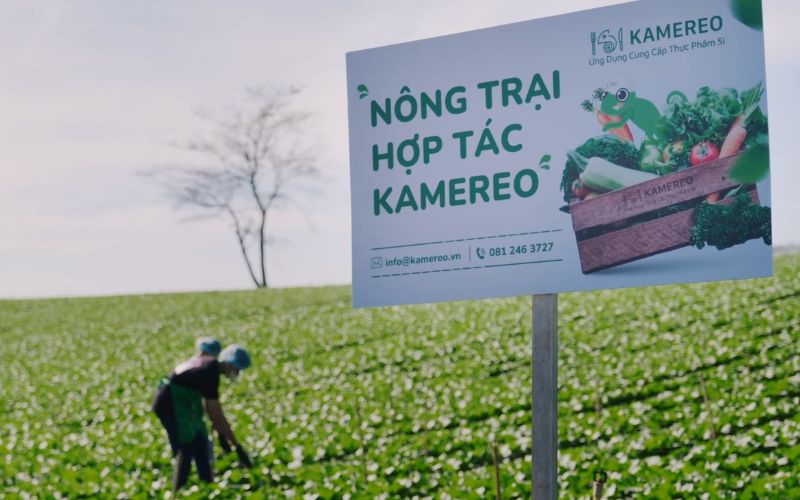
Kamereo direct cooperation with farms that meet VietGAP standards.in Da Lat – Lam Dong. Simultaneously, a vegetable and fruit purchasing center will be built in Duc Trong to help Cameras maintain a stable supply of goods. This will diversify and mitigate shortages for restaurants, eateries, and F&B businesses.
From the growing areas, vegetables are harvested, undergo quality control, and are transported in specialized refrigerated vehicles to the Kamereo warehouse in Ho Chi Minh City. This process helps maintain the freshness of the produce while ensuring that the vegetables are sorted, stored, and packaged according to specific standards for each product group.
Kamereo applies the process of 4-layer quality controlFrom the farm, purchasing center, warehouse, to delivery, vegetables are inspected for freshness, specifications, weight, sensory quality, and overall condition before being delivered to customers. This allows F&B businesses to reduce the risk of receiving substandard goods, minimize losses during processing, and better control dish costs.
Kamereo’s price remained stable for 7 days.
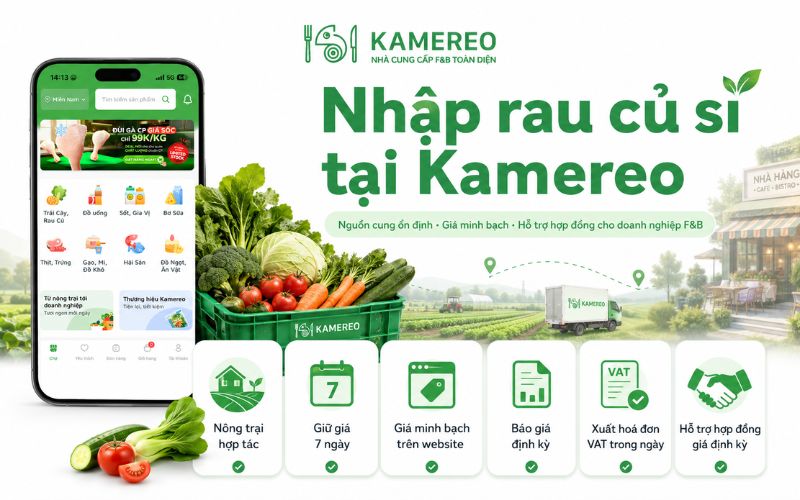
One of the distinguishing features of Kamereo policy is to keep raw material prices stable for 7 days. This helps restaurants, eateries, and F&B businesses plan their weekly inventory, limiting the daily price fluctuations that make food costs difficult to control.
Instead of constantly updating prices daily or worrying about unexpected fluctuations in ingredient costs, businesses can be more proactive in developing meal portion sizes, managing budgets, and ensuring more stable kitchen operations.
Prices are transparent and updated on the website.
Instead of manually asking for prices over the phone or via text message, customers can track product prices directly on Kamereo’s website/app. Transparent pricing makes it easier for businesses to compare prices, budget, and make purchasing decisions more quickly.
Kamereo also supports online price updates and sends periodic quotes to business customers, making input cost management more proactive and transparent.
Regular price quotes are provided when prices change.
For F&B business customers, Kamereo can send periodic price quotes whenever raw material prices change. This helps businesses proactively update input costs, avoiding being caught off guard when the market fluctuates.
Having clear pricing data for each period also helps the operations and accounting departments track budgets, reconcile costs, and develop more effective purchasing plans.
Issue VAT invoice on the day of delivery.
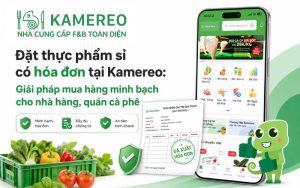
Kamereo supports 100% VAT invoices for all orders. This helps restaurants, eateries, and F&B businesses easily account for expenses, file taxes, and manage purchasing documents transparently.
The distinguishing feature of Kamereo is that the invoice is shipped on the same day of delivery.This service is available even on weekends and holidays. Businesses don’t need to waste time contacting suppliers multiple times, waiting for invoices, or worrying about lost documents, as is the case when purchasing from traditional sources.
After the order is completed, an electronic invoice will be issued automatically sent via email and stored directly in the Kamereo purchase account. This allows businesses to easily look up, reconcile, and manage transaction history whenever needed.
Support for recurring price contracts tailored to business needs.
For businesses that need to purchase goods in large quantities,KamereoWe offer support for recurring price contracts, tailored to each specific case. Businesses can contact Kamereo for advice on policies suitable for their operating model, order frequency, and product catalog.
In addition to providing a stable supply of goods, Kamereo also has a transparent electronic order management, delivery, and invoicing system, helping F&B businesses optimize their procurement processes and reduce manual operational time.
Comparison table of different methods of importing fruits and vegetables:
| Criteria | Traditional method of importing individual vegetables and fruits. | Traditional contracts | Kamereo |
|---|---|---|---|
| Raw material prices | It changes constantly from day to day. | More stable but contract-dependent. | Keep prices stable for 7 days. |
| Price transparency | Depends on the seller. | According to the quotation/contract | Updates and transparent display on the website/app |
| Update when prices change. | Often passive | Depending on the supplier | We provide periodic price updates when prices change. |
| Price contract | Less applicable to small orders | Yes, but usually with many conditions. | Support for recurring price contracts tailored to the business |
| Ability to control food costs | Difficult to control | It's better if the contract is clear. | More flexible, transparent, and easier to track. |
Summary
Choosing between importing vegetables on a daily basis or through recurring contracts will depend on the scale and operational needs of each F&B business. If a solution is needed that provides both a stable supply and the flexibility to order according to actual demand, Kamereo is a suitable choice with a diverse range of vegetables, transparent pricing, fast delivery, and full invoicing support for businesses.