

 0812 46 37 27




Matcha is a premium green tea powder originating from Japan, beloved for its distinctive flavor and high nutritional value. However, not everyone knows the different types of matcha and how to distinguish them for proper use.
In fact, various types of matcha are typically divided into three main categories: ceremonial grade, premium grade for lattes, and culinary grade. Each type has different characteristics, flavors, and uses. Let’s explore the details to understand and choose the most suitable type of matcha for you!
Ceremonial Grade Matcha: Matcha used in ceremonies
Ceremonial Grade Matcha is the highest quality Japanese matcha, carefully selected from the first tender tea leaves of the harvest. Thanks to its superior quality, this type of matcha is often used in traditional tea ceremonies, representing the essence of Japanese tea culture.
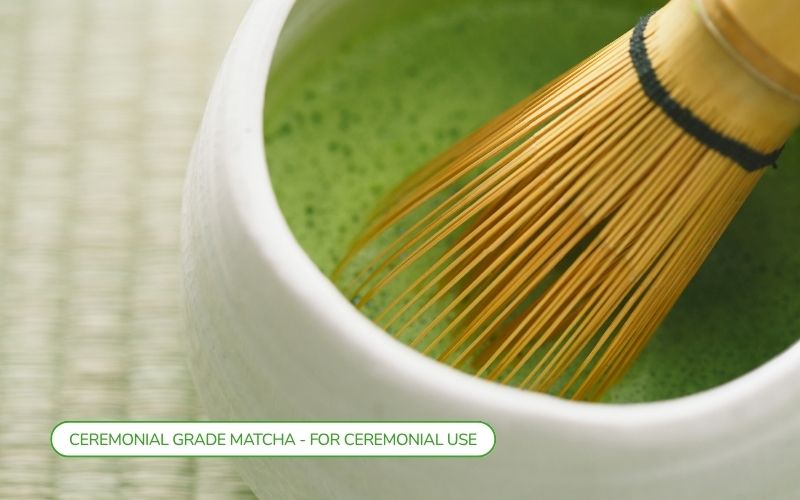
This type of matcha is finely ground using a stone mill, creating an ultra-fine, silky powder texture. When brewed, the matcha has a deep, vibrant green color due to its high chlorophyll content, along with a fresh aroma, subtle sweetness, and a hint of natural earthiness. The flavor of Ceremonial Grade Matcha is delicate, balancing a light sweetness, umami, and a smooth, creamy after taste that lingers on the tongue.
The unique feature of this premium matcha blend is that it’s typically enjoyed in its purest form. Users simply stir the matcha powder with hot water without adding sugar or milk, to fully appreciate its natural flavor. This is also why, when researching different types of matcha, Ceremonial consistently ranks highest in terms of quality.
Although suitable for use in beverages or baking, Ceremonial Grade Matcha’s mild and delicate flavor can easily over power other ingredients. Furthermore, its high price makes it less ideal for large-scale cooking and more suitable for enjoying in tea ceremonies or as a pure, unadulterated matcha drink.
Premium Grade Matcha: Matcha for making beverages
Premium Grade Matcha, also known as everyday matcha or traditional premium matcha, is a popular choice among matcha blends for beverages. It sits between ceremonial and cooking matcha, offering a perfect balance of flavor and cost.
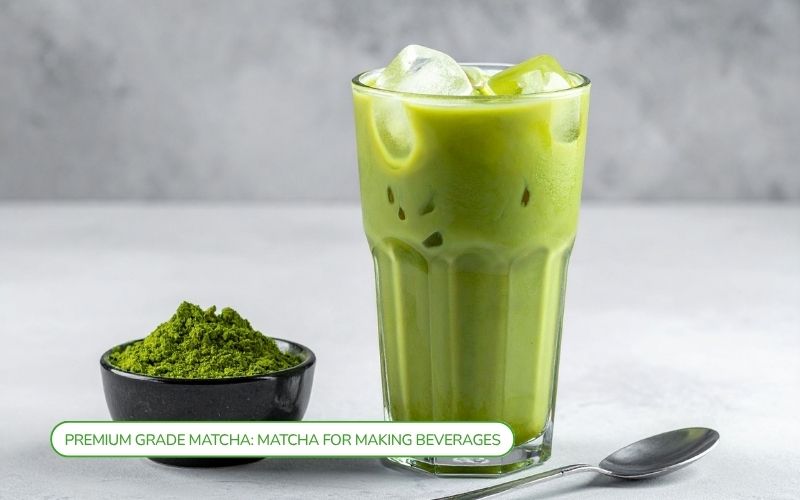
This type of matcha typically has a rich but not overly bitter flavor, combined with a subtle sweetness and a pleasant after taste. The powder retains its vibrant green color, smooth texture, and pure aroma, making it easier to drink than the highest-grade varieties. Therefore, Premium Grade Matcha is considered one of the best matcha types suitable for many people, especially beginners.
Premium Grade Matcha is typically made from tea leaves from the second harvest or a blend of the first and second harvests, resulting in a more pronounced flavor. This makes it ideal for beverages such as matcha latte, matcha milk teas, smoothies, and cocktails. When combined with milk and sugar, the matcha flavor remains prominent without being overwhelmed.
A major advantage of this line is its versatility. You can drink it neat, mix it with water, or create many different beverage recipes. At the same time, it’s more affordable than Ceremonial Grade Matcha used in ceremonies, making Premium Grade Matcha an ideal choice for daily use, 2-3 times a day, while still ensuring the flavor and health benefits.
Culinary Grade Matcha: Matcha used in cooking
Culinary Grade Matcha is a specialized blend used in cooking, often referred to as kitchen matcha or chef’s matcha. Among all types of matcha, it’s the most suitable choice for baking, beverage making, and culinary applications due to its rich flavor and excellent pairing with a wide range of ingredients.
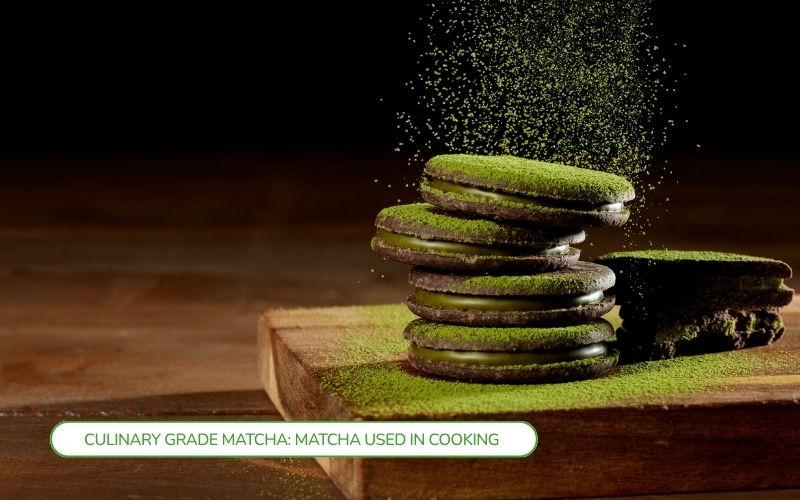
This type of matcha is usually made from older tea leaves, harvested in the second, third, or even later of the season. Due to increased sun exposure, the leaves have a higher catechin content, resulting in a richer, slightly bitter, and less sweet flavor compared to premium varieties. This characteristic helps the matcha’s flavor not “disappear” during processing, but instead stands out in the final product.
In terms of color and texture, Culinary Grade Matcha is typically a pale green or slightly yellowish color, not as vibrant as premium Japanese matcha. Matcha powder used for cooking also has a lower fineness and is slightly coarser due to faster grinding, but it is very suitable for mixing into cake batter, ice cream, or beverages.
One point to note is that many people mistakenly think this is low-quality matcha. In fact, Culinary Grade is produced specifically for cooking purposes, with different standards to optimize flavor when combined with other ingredients. Therefore, if you are looking for matcha powder for baking, cooking, or large-scale beverage preparation, this is the most efficient and economical option.
Below is a summary table comparing the differences between the three types of matcha:
| Criteria | Ceremonial Grade Matcha | Premium Grade Matcha | Culinary Grade Matcha |
|---|---|---|---|
| Segment | Top | Intermediate - Advanced | General (cooking) |
| Harvest season | First young tea leaves (first harvest) | Crop 2 or a mix of Crop 1 & 2 | Mature tea leaves are harvested from the second to the fourth crop. |
| Color | Deep, vibrant green | Bright green | Light green, slightly yellowish |
| Powder texture | Ultra-fine | Smooth | Medium smooth / slightly rough |
| Flavor | Mildly sweet, umami, creamy | Medium strength, not too bitter, easy to drink. | Bold, slightly astringent, not very sweet |
| Scent | Fresh and delicate | Light and pleasant | Milder, with a bitter taste. |
| How to use | It's best to drink it neat to fully appreciate the flavor. | Prepare drinks (latte, milk tea) | Baking, cooking, bartending |
| Cost | Highest | Medium | Lowest |
| Application | Experience the essence of matcha. | Convenient and versatile to drink. | Cost optimization & processing |
Detailed comparison table of premium culinary matcha ceremonial varieties.
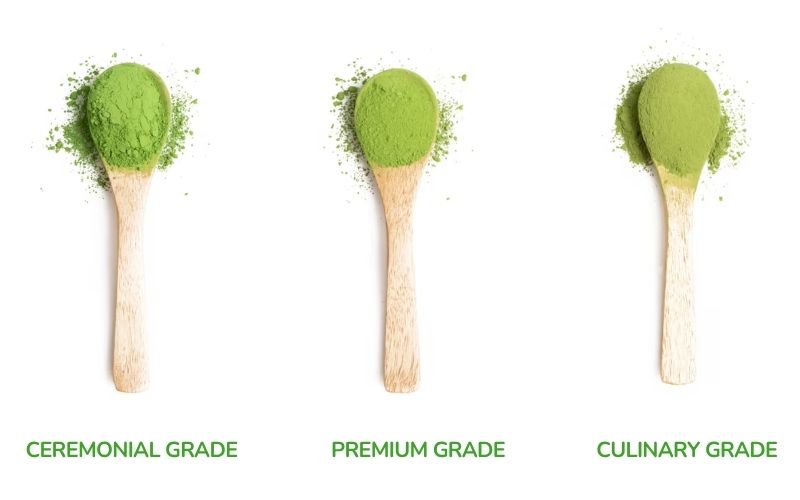
Identify different types of matcha by rubbing the powder between your fingers.
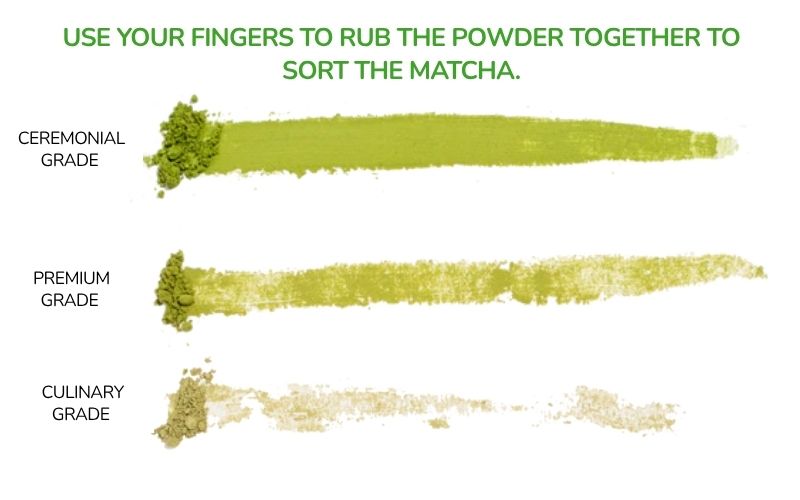
Distinguishing between different types of matcha doesn’t necessarily require specialized equipment. With a simple action of rubbing the matcha powder with your finger, you can quickly assess its quality and classify it into different grades. Just by observing the fineness, uniformity, and color of the powder, you can evaluate the product’s quality.
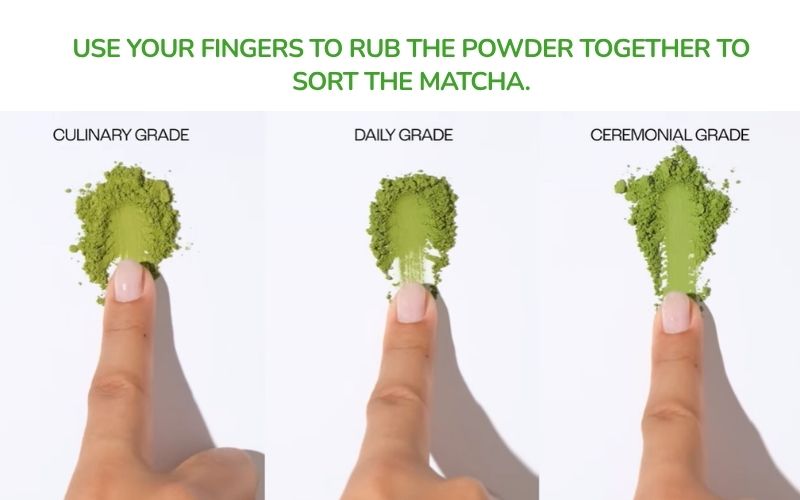
Ceremonial Grade Matcha – Smooth, seamless blend
With Ceremonial Grade Matcha, the experience of kneading the powder is distinctly different:
- The powdered sugar is smooth and seamless, like a layer of paint.
- The powder is completely evenly distributed, with no particles or clumps visible.
- It feels smooth and silky, with almost no friction.
Premium Grade Matcha: The sugar paste is quite smooth and even.
For Premium Grade Matcha, when you rub it with your finger, you will see:
- The powdered sugar is relatively uniform, with few breaks.
- The powder adheres quite well to the skin and is distributed relatively evenly.
- It has a moderately smooth feel, not completely silky but pleasant to the touch.
Culinary Grade Matcha: Unevenly milled powder.
When you rub the Culinary matcha powder with your finger, you’ll easily notice:
- The powdered sugar, after being kneaded, is not continuous and often breaks into segments.
- The powder doesn’t spread evenly across the skin surface, resulting in areas of varying thickness.
- The texture is not smooth to the touch; it’s slightly rough and grainy.
In terms of color, this type of matcha tends to be yellowish-green or dull green, lacking vibrancy.
Famous matcha-growing regions in Japan
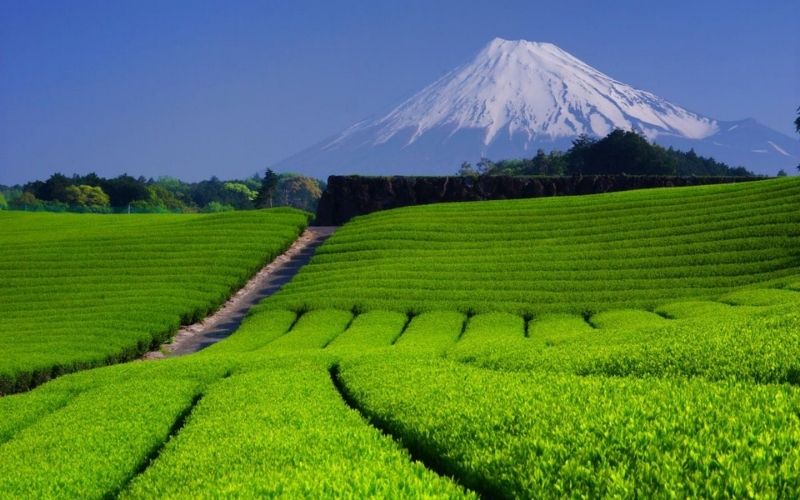
Besides being classified by grade, Japanese matcha is also clearly identifiable by its growing region. Each production area has different climatic conditions, soil types, and cultivation techniques, resulting in distinct flavors, colors, and qualities for each type of matcha.
- Uji: Uji is considered the oldest and most famous matcha-growing region in Japan. Matcha from this area typically has a balanced flavor, rich umami, and a subtle sweet aftertaste. Thanks to its traditional production process and high standards, Uji is always a top choice when it comes to delicious matcha and premium matcha.
- Yame: Yame is also a prominent matcha-growing region in Japan, known for its high-quality matcha. Matcha from this region tends to be sweeter, with a delicate aroma and a deep aftertaste. Therefore, Yame is often used to produce high-quality ceremonial matcha.
- Shizuoka: This is the areaShizuoka, the largest tea-growing region in Japan, offers a wide variety of matcha powders at different price points and qualities. Matcha from Shizuoka has a balanced, easy-to-drink flavor, suitable for everyday use or for brewing.
- Kagoshima: This is a modern growing region with high yields and advanced cultivation methods. Matcha from here typically has a fresh, slightly bolder, and less bitter flavor, suitable for a variety of uses, from beverages to cooking.
Overall, each growing region contributes to the diversity of matcha varieties on the market. Understanding the origin not only helps you answer the question of what types of matcha are available, but also helps you choose the right product to suit your taste and intended use.
Wholesale Japanese matcha available at great prices Kamereo for cafes and restaurants
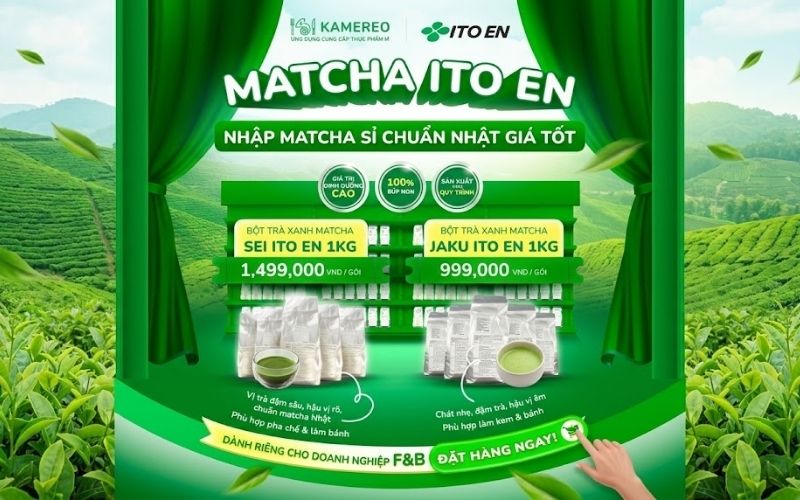
Kamereo is wholesale food supply app designed for businesses in the food service industry, offering a convenient, transparent, and stable wholesale purchasing solution.In its product catalog, Itoen authentic Japanese matcha is one of the standout choices, meeting the demand for high-quality ingredients for restaurants, cafes, and professional beverage businesses.
Matcha Itoen produced from carefully selected green tea leaves in Japan, using a shade-based cultivation process and finely ground with modern technology, this product retains its natural green color and distinctive refreshing, sweet after taste. Through Kamereo, businesses can access authentic Itoen matcha at competitive wholesale prices. Fast ordering, on-time delivery, and efficient order management. It helps optimize operations for business units.
Import authentic Japanese matcha at wholesale prices at Kamereo:
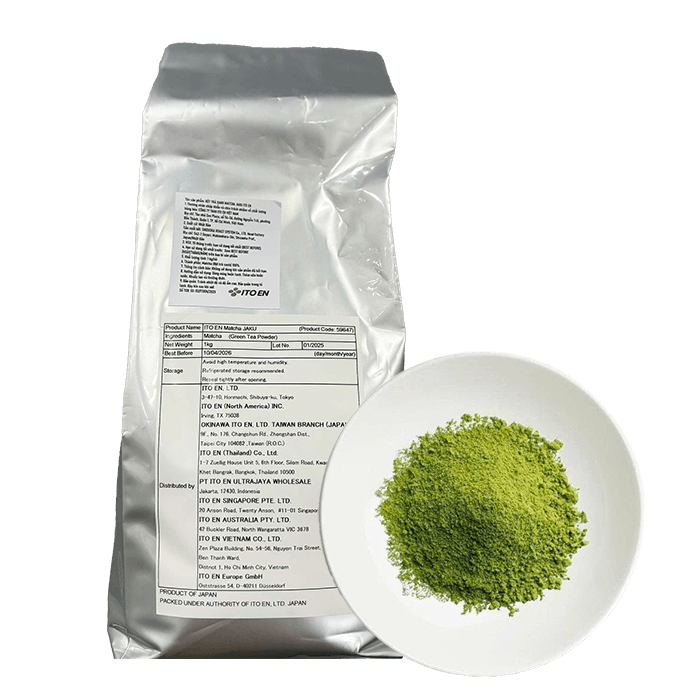
Ito En Matcha Powder Jaku 1kg
1,219,000đ/PACK
1,352,500đ/PACK
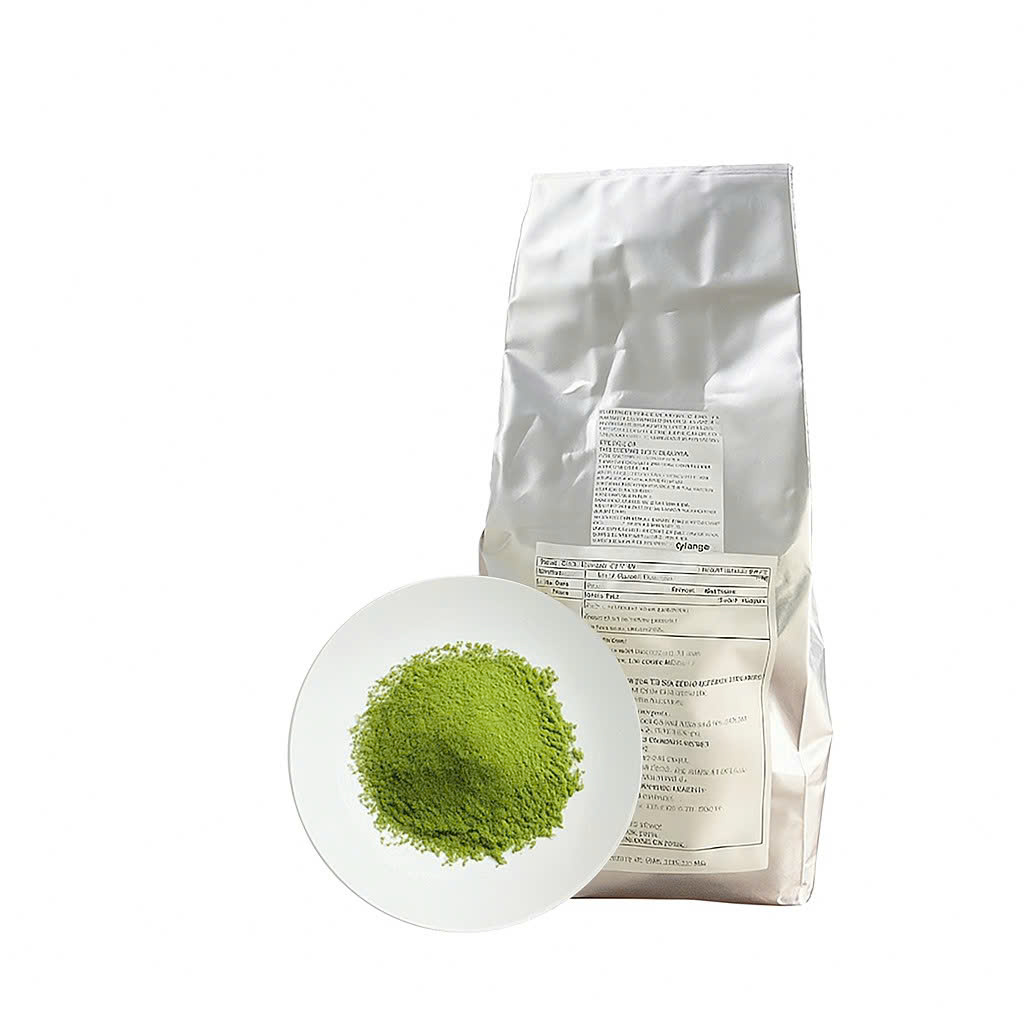
Ito En Matcha Powder Sei 1kg
1,689,000đ/PACK
2,077,000đ/PACK
![[Carton] Ito En Matcha Powder Jaku 1kg x 10 packs](https://image-handler-prod.s3-ap-southeast-1.amazonaws.com/supplier/654/PRODUCT_IMAGE/2e977d6d-4459-461d-8e50-19435a4ec102.png)
[Carton] Ito En Matcha Powder Jaku 1kg x 10 packs
11,250,000đ/CARTON
12,971,500đ/CARTON
![[Carton] Ito En Matcha Powder Sei 1kg x 10 packs](https://image-handler-prod.s3-ap-southeast-1.amazonaws.com/supplier/654/PRODUCT_IMAGE/2d6b0cb2-ad46-42ff-a591-1e78dedf8a10.png)
[Carton] Ito En Matcha Powder Sei 1kg x 10 packs
15,500,000đ/CARTON
17,361,500đ/CARTON
The biggest difference of Kamereo lies in…modern technology platform This allows you to quickly place orders, track costs, and manage orders directly on the app and website. This is especially useful for multi-branch chains, helping to control materials and budgets more effectively than traditional sourcing methods.
Kamereo also ensures a stable supply with quality is strictly controlled through multiple steps From supplier selection to storage and delivery, everything is optimized to ensure that the matcha always meets standards when it reaches the customer. This allows cafes and restaurants to operate with peace of mind, without worrying about shortages or inconsistent quality.
Another major advantage is that prices are transparent and updated regularly. Businesses can easily track price fluctuations, receive regular price quotes, and proactively control import costs, especially suitable for using large quantities of matcha powder for beverages and cooking.
Kamereo provides 100% VAT invoices for all orders invoices are issued on the same day of delivery, including weekends and holidays. Invoices are automatically sent via email and stored in the system, making it easy for businesses to reconcile accounts, declare taxes, and ensure legal transparency – a significant advantage over traditional suppliers.
In addition, with the mission to become “All-in-one supplier” Kamereo not only offers matcha but also offers over 3000+ diverse products ingredients for beverages, food, and kitchen equipment. This helps cafes and restaurants. Save time sourcing products, optimizing operations and focusing on more effective business development.
With the goal of becoming a reliable supplier in the food service industry, Kamereo not only provides products but also accompanies customers in improving the quality of ingredients and building a sustainable competitive advantage in the market.
Frequently Asked Questions
Can matcha used in cooking be used in beverages?
Yes, but it’s not the optimal choice. Matcha used in cooking has a strong, slightly bitter flavor, suitable for pairing with sugar, milk, or other ingredients. However, when used in drinks like lattes, the flavor may not be as smooth and refined as higher-grade matcha varieties.
Which type of matcha is suitable for making lattes?
Latte Grade Matcha (everyday matcha) is an ideal choice. It has a balanced flavor, isn’t too bitter, and retains its aroma and umami taste when combined with milk. It’s also one of the most popular and delicious matcha varieties for coffee shops.
How to choose quality matcha?
You can identify quality matcha based on several factors: a bright green color, a fine, powdery texture, a fresh aroma, and the smooth foam it creates when whipped. Additionally, choose products with a clear origin from regions renowned for Japanese matcha production to ensure quality.
Does matcha have a higher caffeine content than coffee?
No. Matcha typically contains less caffeine than coffee, but thanks to L-theanine, energy is released more slowly and steadily. This helps you stay alert longer without the sudden “energy drop” you experience when drinking coffee.
Summary
Clearly understanding various types of matchaThis will help you choose the right product for each purpose: drinking it pure, mixing it into drinks, or cooking. From premium ceremonial matcha to matcha lattes and culinary options, each type has its own unique flavor profile and applications. If you’re looking for a source of high-quality, affordable matcha for your business, don’t miss our professional supply solutions. Explore now and choose the best matcha varieties to suit your needs!
See more: