

 0812 46 37 27




The Cold Food Festival countdown helps you track the exact date of this traditional holiday, which falls on the 3rd day of the 3rd lunar month. It is closely associated with making glutinous rice balls (bánh trôi, bánh chay) to honor ancestors and express gratitude. In 2026, the Cold Food Festival takes place on April 19 (Sunday), offering a convenient time for families to prepare offerings and gather together. Follow the countdown so you don’t miss this meaningful occasion.
What is the Cold Food Festival (Tết Hàn Thực)?
Tet Han Thuc, meaning “cold food” in Sino-Vietnamese, is a traditional festival celebrated on the 3rd day of the 3rd lunar month every year. On this occasion, Vietnamese people often make glutinous rice balls and vegetarian cakes to offer to their ancestors’ altars.
Unlike some countries that strictly observe the custom of avoiding fire, in Vietnam, this holiday has a gentler meaning, focusing more on remembering ancestors and preserving family values.
The origin of the Cold Food Festival
The Cold Food Festival originated in China during the Spring and Autumn period (770–221 BC), associated with the story of Jie Zitui, a loyal minister who wholeheartedly served King Wen of Jin. During his exile, he cut flesh from his own thigh to cook soup to save the king, demonstrating his profound loyalty.
After ascending the throne, the king wanted to reward him, but Jie Zitui retreated into seclusion. When the king ordered the forest to be burned to force him out, unfortunately, both he and his mother perished in the fire. In remembrance, the king issued a decree prohibiting the use of fire for several days, and only cold food was eaten, thus giving rise to the Cold Food Festival.
When introduced to Vietnam, especially during the Le Trung Hung period (16th-18th centuries), this custom was modified. Vietnamese people were not overly strict about abstaining from fire, but instead focused on making traditional cakes to offer to their ancestors. Therefore, when watching the countdown to the Cold Food Festival, the preparation of cakes and the offerings receive more attention.
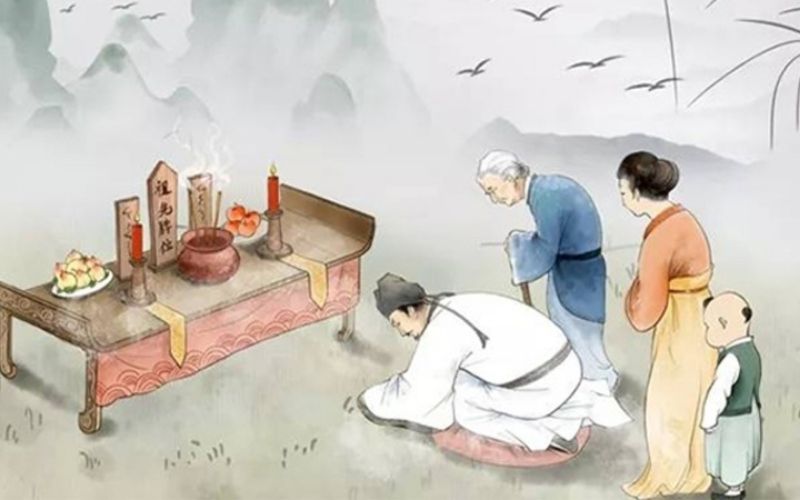
The meaning of the Cold Food Festival
The Cold Food Festival (Tết Hàn Thực) holds profound cultural and spiritual value in the lives of Vietnamese people:
- Remembering our ancestors: It is an occasion for descendants to express gratitude to the deceased.
- Preserving traditions: Maintaining the tradition of baking through generations.
- Family bonding: Let’s prepare and gather together in a warm and cozy atmosphere.
- Celebrating purity and simplicity: The round, white glutinous rice balls and the refreshing vegetarian cakes represent a philosophy of gentle and harmonious living.
- Reminding people of the principle of “drinking water and remembering the source” in modern life.
Traditional customs at the Cold Food Festival
On the third day of the third lunar month, many Vietnamese families still maintain familiar customs:
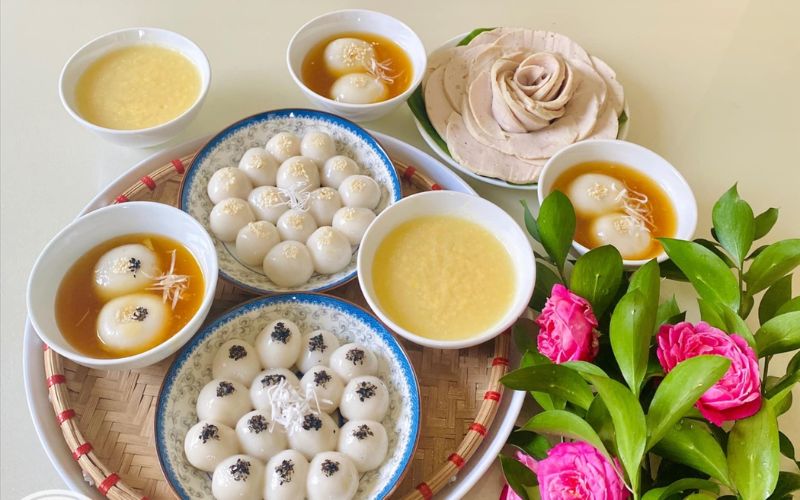
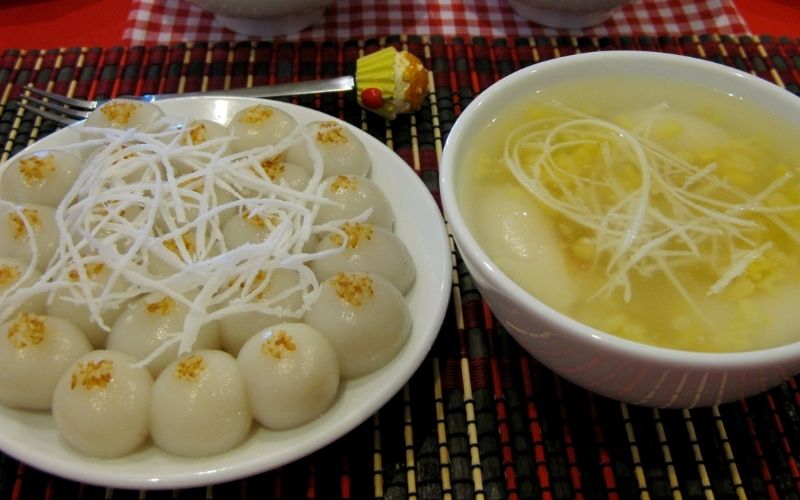
- Eating glutinous rice balls and vegetarian cakes: These are two characteristic cakes, also known as “Han Thuc cakes,” associated with the long-standing tradition of the Han Thuc Festival. According to many records, this custom dates back to the Le Trung Hung era and is mentioned in folklore documents. The cakes are made from glutinous rice flour – a typical ingredient of the rice-farming civilization, symbolizing purity and family unity. The round, white shape of the cakes also evokes the legend of Au Co and Lac Long Quan, representing the spirit of “drinking water, remembering the source” and family reunion.
- Eating rice rolls: According to many historical records, rice rolls are also a traditional dish during the Cold Food Festival, believed to have originated during the Tran Dynasty. Over time, this custom has been preserved and continued to this day, contributing to the richness of traditional cuisine during the festival.
- Offering the ceremonial tray to the ancestral altar: Expressing respect and remembrance for ancestors.
- Clean the house thoroughly: Create a neat and dignified space for the holiday.
- Limit cooking with open flames: It is common practice to prepare cold dishes in advance, according to traditional beliefs.
These customs, when combined with observing the countdown to the Cold Food Festival, will help make the preparation process more complete and meaningful.
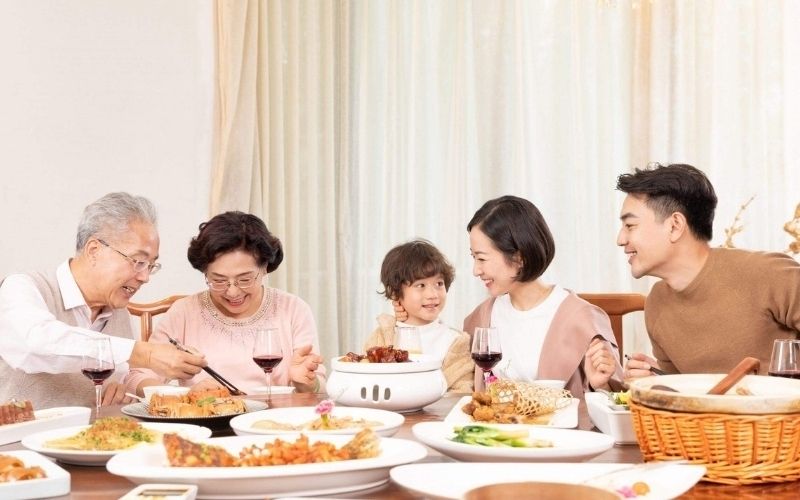
What does the offering tray for the Cold Food Festival (Tết Hàn Thực) consist of?
The offerings for the Cold Food Festival are usually simple but still ensure that they fully reflect traditional meanings:
- Rice dumplings: Symbolizing completeness and fulfillment.
- Vegetarian cakes: It signifies purity and gentleness.
- Fresh flowers, incense, and clean water.
- Seasonal fruits
- Betel nut (depending on regional customs)
According to folk beliefs, odd numbers are considered lucky, so glutinous rice balls and vegetarian cakes offered as sacrifices are usually prepared in quantities of 3 or 5 bowls.
Depending on each family’s circumstances, the offerings can be flexibly changed. However, the most important thing remains sincerity. Preparing early through the countdown to the Cold Food Festival will help you avoid omissions and ensure everything goes smoothly.
What should we avoid during the Cold Food Festival?
Besides the rituals, the Cold Food Festival also has some taboos that need to be noted:
- Avoid offering glutinous rice balls with too many colors: The holiday emphasizes purity, so naturally white cakes are often used.
- Avoid moving house: Folklore suggests that changing residences can easily disrupt family harmony and bring misfortune.
- Do not display fruits with thorns or a bitter taste: It signifies avoiding misfortune and difficulties in life.
- Avoid using lilies, frangipani, and marigolds when making offerings: To reduce superstitious beliefs about bad luck.
Frequently Asked Questions about the Cold Food Festival
Below are some common questions regarding holiday periods and differences between festivals in the third lunar month. Understanding this information will help you be more proactive in tracking and preparing for the holidays.
Is it possible to have a day off during the Cold Food Festival (Tết Hàn Thực)?
The Cold Food Festival is not an official public holiday as stipulated in the 2019 Labor Code, so employees usually continue to work as usual. However, you can still arrange time off in some cases, such as when a holiday falls on a weekend, by agreeing on leave with your employer, or by proactively using your annual leave.
Is the Cold Food Festival the same as the Qingming Festival?
Cold Food Festival and Qingming Festival. These are two completely different holidays. Although in reality they occur in close succession over many years, this can easily lead to confusion for many people.:
- Time: Cold Food Festival falls on the 3rd day of the 3rd lunar month; Qingming Festival is usually from April 4th to 6th in the Gregorian calendar.
- Activities: Offering sacrifices at home during the Cold Food Festival; visiting and cleaning graves during the Qingming Festival.
- Offering tray: For the Cold Food Festival, a simple tray with glutinous rice balls and vegetarian cakes; for the Qingming Festival, a more varied tray, possibly including votive paper money.
- Meaning: Han Shi (Cold Food Festival) emphasizes purity and remembrance within the family; Qing Ming (Qingming Festival) emphasizes filial piety and caring for graves.
How does the Cold Food Festival in Vietnam differ from the Cold Food Festival in China?
In China, during the Cold Food Festival, people usually refrain from using fire and prefer cold dishes. Throughout the three days of the festival, many traditional activities are also held, such as visiting graves, cockfighting, swinging, and boat racing, creating a rich cultural atmosphere.
Meanwhile, in Vietnam, the Cold Food Festival has a gentler meaning and focuses more on family. Vietnamese people usually prepare offerings with glutinous rice balls and vegetarian cakes to offer to their ancestors and Buddha. Notably, there is no custom of abstaining from fire or eating cold food like in China, showing a clear difference in how the two countries celebrate the festival.
Summary
Hopefully, through this article, you now have a better understanding of the origin, deep meaning, and traditional customs of the Cold Food Festival in Vietnam. Following the Cold Food Festival countdown not only helps you manage your time effectively but also allows you to prepare offerings, especially bánh trôi and bánh chay, more thoughtfully. Plan ahead to ensure a complete, warm, and meaningful celebration with your family.